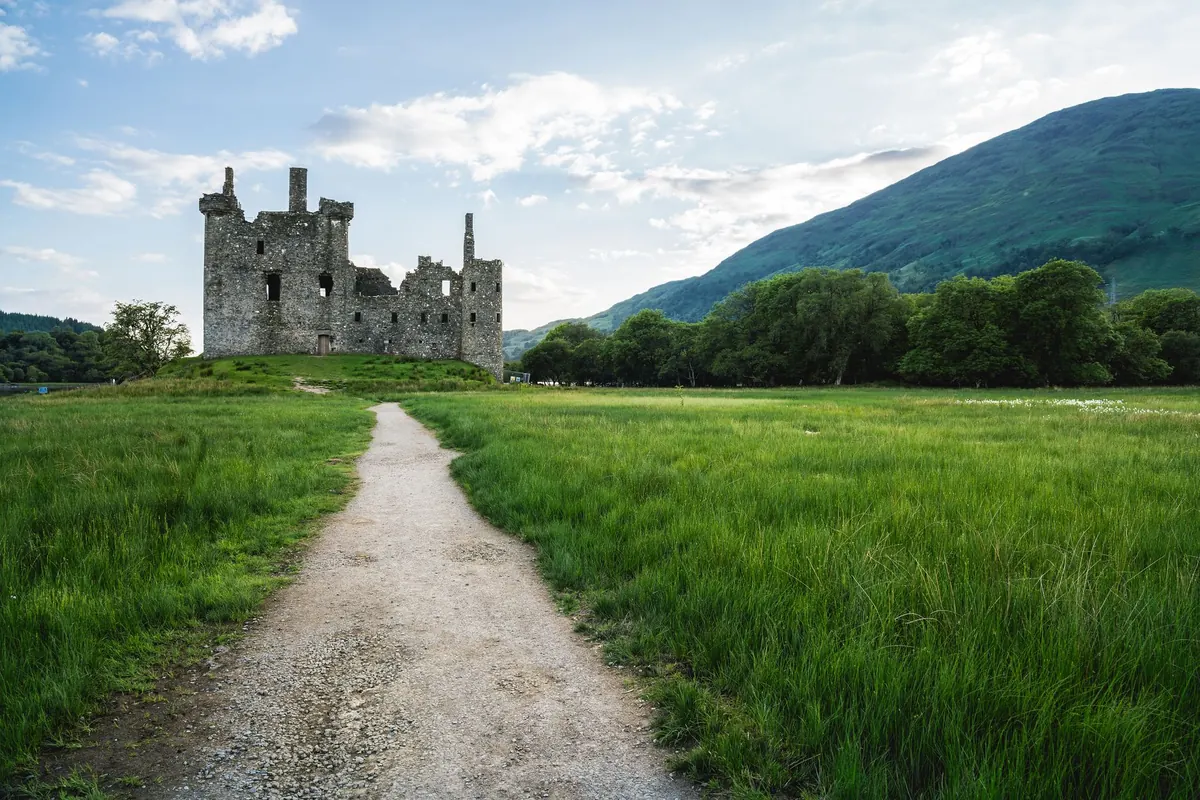
Ben Lomond has a habit of being someone's first Munro. It is the most southerly of the 282 Scottish mountains over 3,000 feet, and the main path from Rowardennan is well built, easy to follow and generous with views almost from the first step. On a clear Saturday in July you will share the summit with a good few dozen other people, which says something about how straightforward the hill is — and something about how popular. Here is what to expect before you set off.
Choosing your route up
Almost every practical route starts on the east shore of Loch Lomond at Rowardennan, at the end of the B837. Three options are worth knowing about, and the first of them suits nearly everyone making a first attempt.
The main path from Rowardennan
This is the tourist path, and it earns the name in the best sense: waymarked, obvious, and engineered to cope with thousands of pairs of boots a year. Expect roughly 12 km and 960 m of ascent for the round trip.
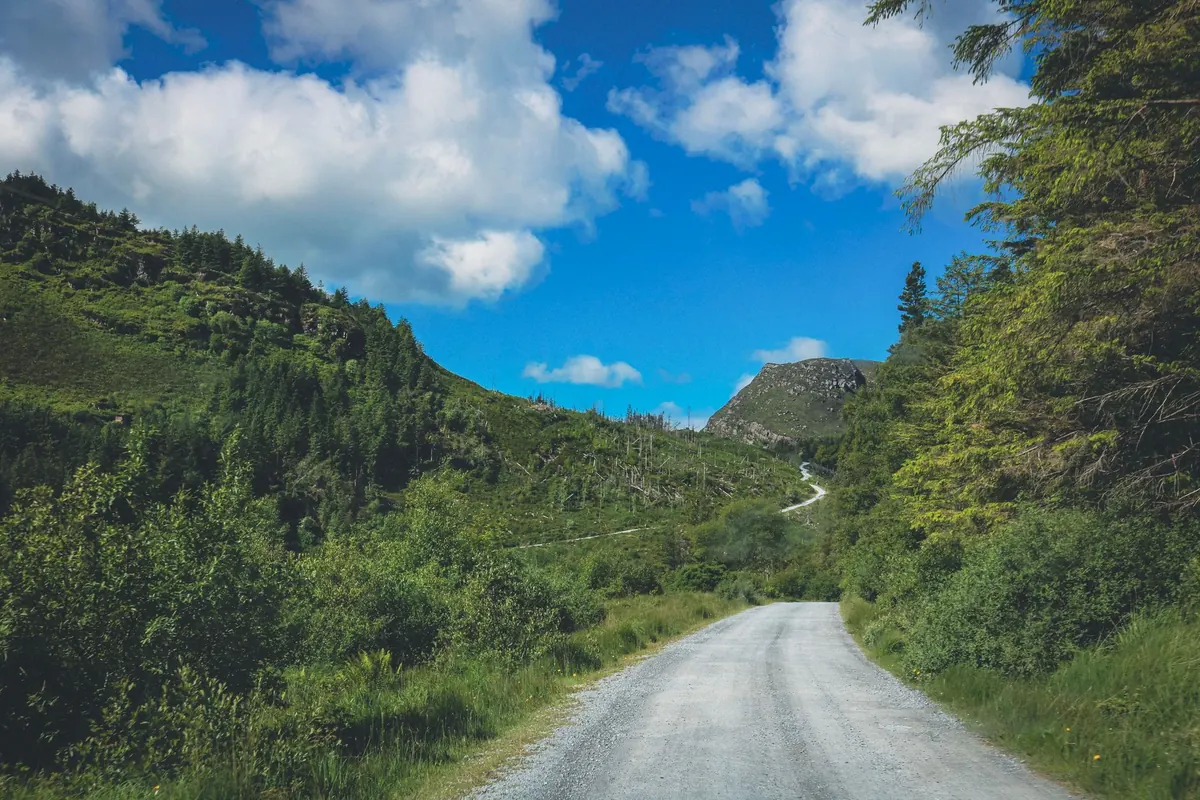
It leaves from the car park, crosses the road and drops into oak woodland on a wide track. That first stretch is gentle enough to lull you into a false sense of effort. Then the trees thin, the path turns onto open hillside and the climbing starts in earnest — long, steady zigzags through heather and bracken with the loch always on your left shoulder. About two-thirds of the way up you meet a junction where the Ptarmigan path comes in from the right; keep straight on.
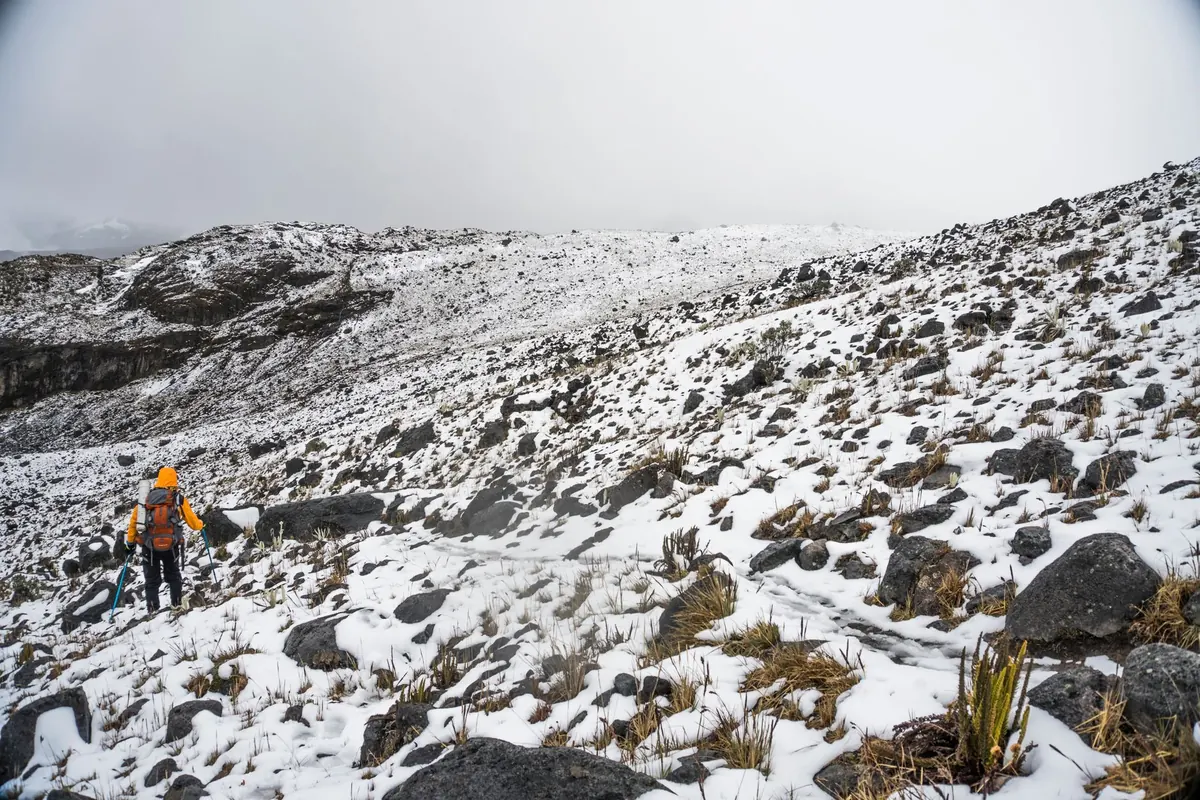
The gradient eases briefly before the final pull, which is steeper and rougher, with loose stone and boulders near the top. Nothing needs hands, but it is the section that feels most serious in bad weather. In winter, with snow and ice on it, this is a different hill altogether and needs an ice axe, crampons and the experience to use them.
The Ptarmigan Ridge
The Ptarmigan branches off the main path lower down and climbs over a rocky knoll before rejoining the tourist route below the summit. It is quieter, airier and more interesting, with a short, easy scramble near the top if you take the direct line. Allow an extra half hour each way, and save it for a dry day — wet rock and greasy grass make the descent tediously slow.
Longer approaches
From Balmaha you can walk the West Highland Way up the lochside to Rowardennan and then climb, adding several kilometres to the day. It is a lovely approach if you have arranged a lift or a taxi, and a punishing one if you have not. Walking off the north end of the summit ridge towards Inversnaid is for fit, experienced hillwalkers with a long day and transport sorted.
How long does it take?
Most people take between four and six hours for the round trip, including stops. A fit walker moving steadily will do it in three and a half to four. Do not plan on the basis of your best-case pace — plan on the basis of your worst, especially on the descent, when tired legs and loose gravel slow you down far more than you expect.
A useful rule of thumb for any hill day is one hour for every five kilometres, plus half an hour for every 300 m of ascent. On Ben Lomond that gives a little under four hours of moving time, which leaves plenty of margin for photographs and sandwiches. Start early: the car park fills by mid-morning in summer, and in the short days of December you want to be down well before dusk.
Parking, access and getting there
Ben Lomond is cared for by the National Trust for Scotland, and the main car park at Rowardennan is at the very end of the B837. It is chargeable and it is not large. On summer weekends and public holidays it is often full by nine in the morning, so arrive early or come on a weekday. When the car park is full, park considerately on the roadside where it is safe and legal, never across gates, passing places or private driveways — the road is a working one for the farms and the youth hostel.
There are public toilets at Rowardennan. The nearest shops, cafés and fuel are back at Balmaha, so bring what you need with you. Public transport to Rowardennan is limited and seasonal, so most people drive; check current timetables before you rely on a bus.
What to take
- Boots with proper grip. Trainers will get you up and punish you on the way down.
- Waterproof jacket and overtrousers, whatever the forecast says at sea level. Ben Lomond makes its own weather.
- A warm spare layer, hat and gloves. The summit is exposed and often 5°C colder than the car park.
- Water and food for the whole day, plus a little extra in case you are slower than planned.
- A paper map and compass — OS Explorer OL39 or Landranger 56 — and a charged phone with offline mapping as backup, not as your only tool.
- A headtorch, even if you intend to be down by four.
- Blister plasters, sun cream and midge repellent from May to September. The midges are worst at low level on still, damp evenings.
- Trekking poles if your knees complain on descents. They make the loose top section much kinder.
The views over Loch Lomond
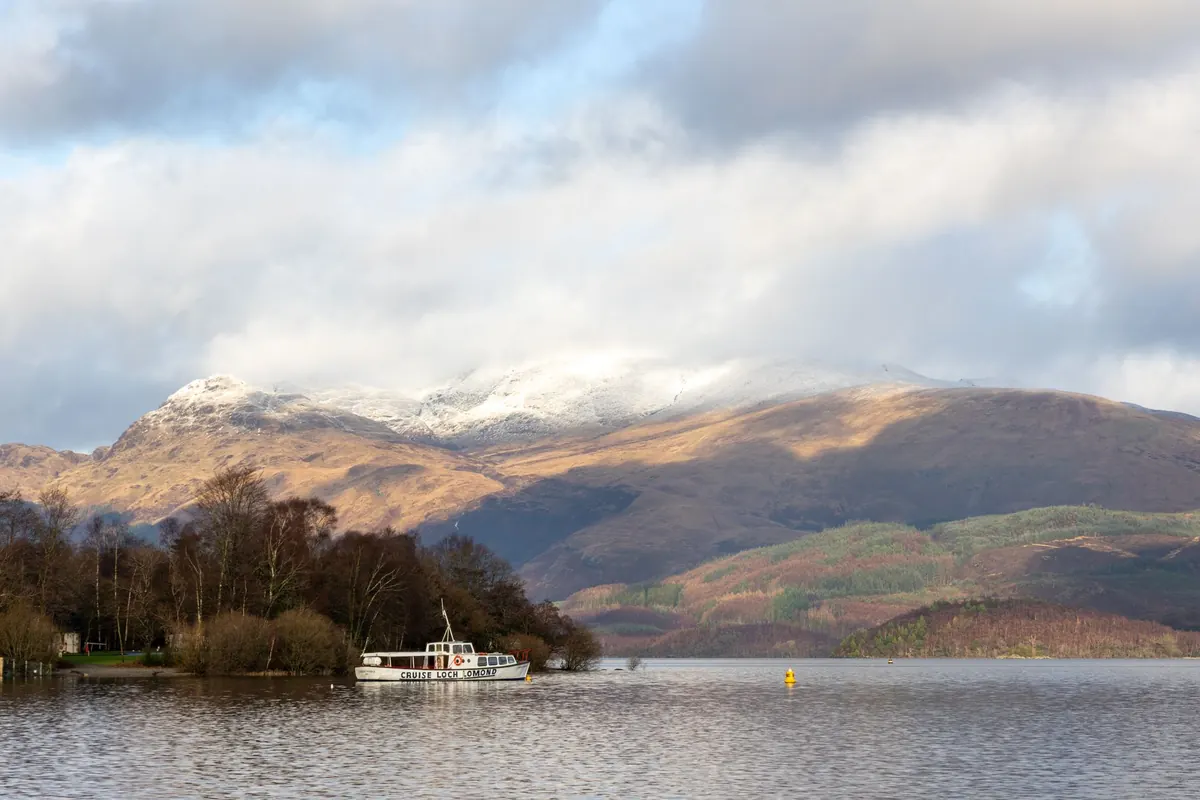
The summit panorama is the reason the hill is so busy. Loch Lomond stretches away south with its islands scattered across it, and from the cairn you can pick out the Arrochar Alps and Loch Long to the west, the Trossachs to the east, and the Highlands stacking up to the north. On a very clear day Arran and the Paps of Jura appear away to the south-west.
Walk a circuit of the summit rather than stopping at the first cairn. The view north along the loch, with the ridge falling away towards the ptarmigan country, is the finest of the lot and most people miss it. Halfway up, the path also gives you a long look straight down the length of the loch that is worth a proper pause.
Weather, safety and looking after the hill
Check a mountain forecast — MWIS and the Met Office both publish one — and be honest with yourself about what it means. Wind is the thing that ruins days on Ben Lomond: the summit ridge is exposed, and a gusty day on the top is genuinely unpleasant. If cloud is forecast to sit on the hill, take the navigation seriously, because it is easy to follow the wrong gully down in poor visibility.
Tell someone where you are going and when you expect to be back. Mobile signal is patchy and disappears entirely on parts of the upper hill. Keep dogs under close control, and on a lead during lambing and the ground-nesting season in spring and early summer. Take all litter home, including fruit peel and the inevitable stray tissue. If you have a heart or lung condition, or any doubt about how your body will handle a sustained climb, speak to your GP before the trip.
Before you set off
Fill the flask, print or download the map, and give yourself six hours. Ben Lomond rewards an early start more than almost any other Munro: you get the quiet woodland, cool air on the climb, and a summit that is not yet crowded. Take your time on the upper boulders, turn around often to watch the loch open out below you, and you will finish the day understanding exactly why people keep coming back to this hill.
Photo: Mahmut yılmaz / Pexels